Rare but Not Invisible: Ellis–Van Creveld and the Challenges in Rare Disease Care
By Linord R. Moudou
When a rare genetic diagnosis lands in a family’s lap, biology is only part of the story. In this feature, one family’s experience with Ellis–Van Creveld syndrome shows how genes, health systems, and geography together shape survival.
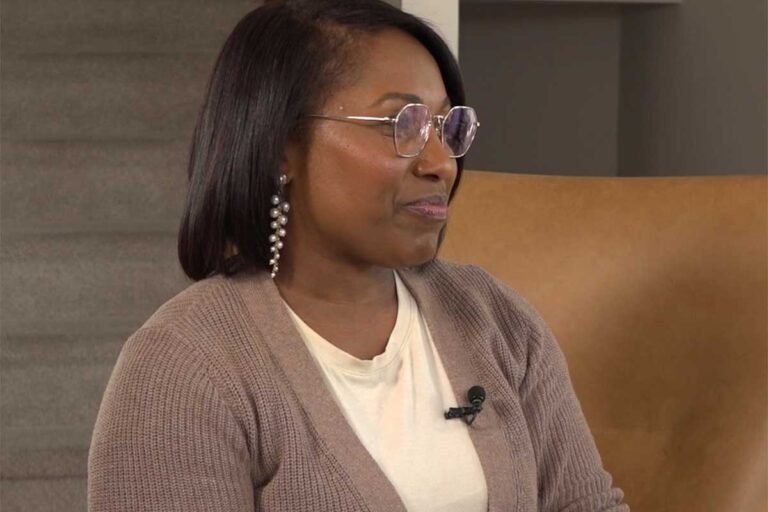
Erica Shoemate at home, reflecting on her family’s journey with Ellis–Van Creveld syndrome.
“Terminate, heal, and try again, in that order.”
That was the recommendation.
At just over 20 weeks pregnant, Erica Shoemate sat in an exam room as doctors told her and her husband their daughter had a lethal genetic condition. The message was blunt: end the pregnancy, recover, move forward.
“There was no behavioral health support in that moment,” Shoemate recalls. “You’re being told your child is not compatible with life, and you’re expected to process that clinically.”
The suspected diagnosis was Ellis–Van Creveld syndrome (EVC), a rare inherited disorder that affects skeletal development and often the heart. In most parts of the world, EVC is estimated to occur in roughly 1 in 60,000 to 200,000 births, according to the NIH’s Genetic and Rare Diseases Information Center. Orphanet, the European rare disease database, notes that only a few hundred cases have been formally documented in the medical literature, many clustered in specific communities due to founder effects.
Shoemate and her husband chose not to terminate the pregnancy.
“You don’t know what you’re going to do until you’re in that situation,” she says. “It’s not black or white. It’s very gray.”
Their daughter survived.
But survival depended on reaching the right specialists.
When Survival Depends on Specialization
Ellis–Van Creveld syndrome is inherited in an autosomal recessive pattern: both parents must carry the altered gene, and the condition appears when a child inherits two copies. Children with EVC typically present with short stature, extra digits, dental abnormalities and nail differences. The most serious complications often involve the heart.
“The most challenging aspect of EVC is the heart condition,” says Dr. Laura Poskitt, medical director of the Clinic for Special Children in Pennsylvania.
She estimates that between 60 to 80 percent of children with EVC are born with significant congenital heart disease, often atrioventricular canal defects in which the walls separating the heart chambers are incomplete and the valves leak. Some defects are manageable. Others require complex surgical repair early in life.
Historically, surgeons moved quickly. Babies with large cardiac defects underwent openheart surgery within weeks of birth. For children with EVC, whose rib cages and lungs are smaller than average, that approach often led to devastating complications.
Over time, clinicians caring for Amish children with EVC altered the timeline. Instead of rushing to surgery, they stabilized infants at home with tracheostomies, ventilators and feeding tubes, allowing the chest and lungs to grow. Heart surgery was delayed until closer to nine to twelve months of age. Survival improved.
“Someone with EVC who has a normal heart has a full life expectancy,” Poskitt says. “Cognitively, these children are typically normal.”
That clarity rests on experience.
In Pennsylvania, EVC is more common among the Old Order Amish because of a genetic founder effect.
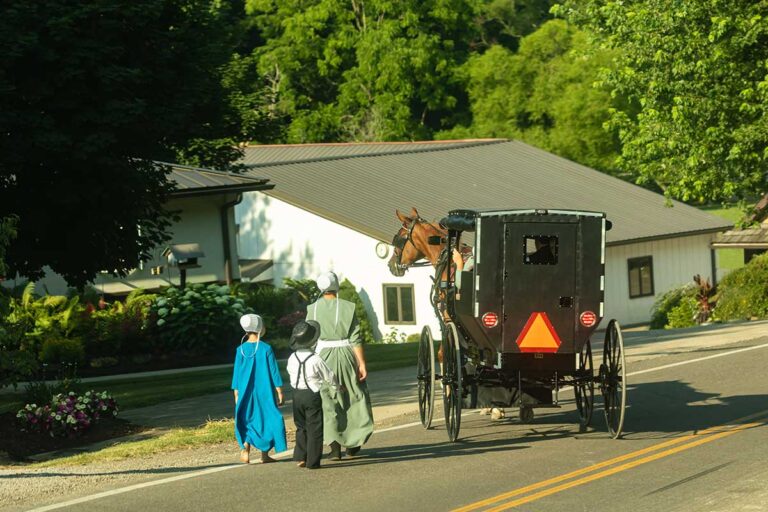
Amish communities in Pennsylvania have been the focus of research on Ellis–Van Creveld syndrome, which is linked to a genetic founder effect.
Roughly one in eight Amish individuals carries an EVC mutation, a rate far higher than in the general population. Poskitt explains that the mutation in this community can be traced back to a single immigrant, Samuel King, who arrived in Pennsylvania in the eighteenth century.
That concentration allowed earlier recognition and refined care protocols. Outside that context, familiarity with the condition is limited.
When knowledge is limited, conversations about prognosis can become overly rigid.
When Data Does Not Reflect the Patient
“We’re not Amish. We’re not Dutch,” Shoemate says. “So, what does that mean for us?”
Most published descriptions of EVC come from Amish cohorts. On paper, her daughter’s suspected condition resembled a different, uniformly lethal shortrib polydactyly syndrome.
Shoemate’s instincts pushed her to question assumptions.
“You can either skew the data or ignore the data,” she says, “and you get two completely different outcomes.”
Her daughter’s care changed only after referral to a national skeletal dysplasia center operating with true interdisciplinary coordination. There, specialists recognized the nuances between lethal and non-lethal skeletal dysplasia, understood the bell-shaped chest and long, slender lungs that characterize many EVC patients, and drew on protocols developed with Amish children in nearby Pennsylvania.
“It wasn’t just multidisciplinary,” she explains. “It was interdisciplinary. That changed everything.”
Instead of separate specialists working in parallel, her daughter’s cardiologist, pulmonologist, orthopedist, and other clinicians met around a single plan. Care became coordinated rather than fragmented. The difference showed up not in theory, but in oxygen saturations, hospitalizations avoided and a little girl who now attends school, jokes with her friends and prepares for orthopedic surgery while living what her mother calls an “ordinaryextraordinary” life.
The broader rare disease landscape reflects similar gaps.
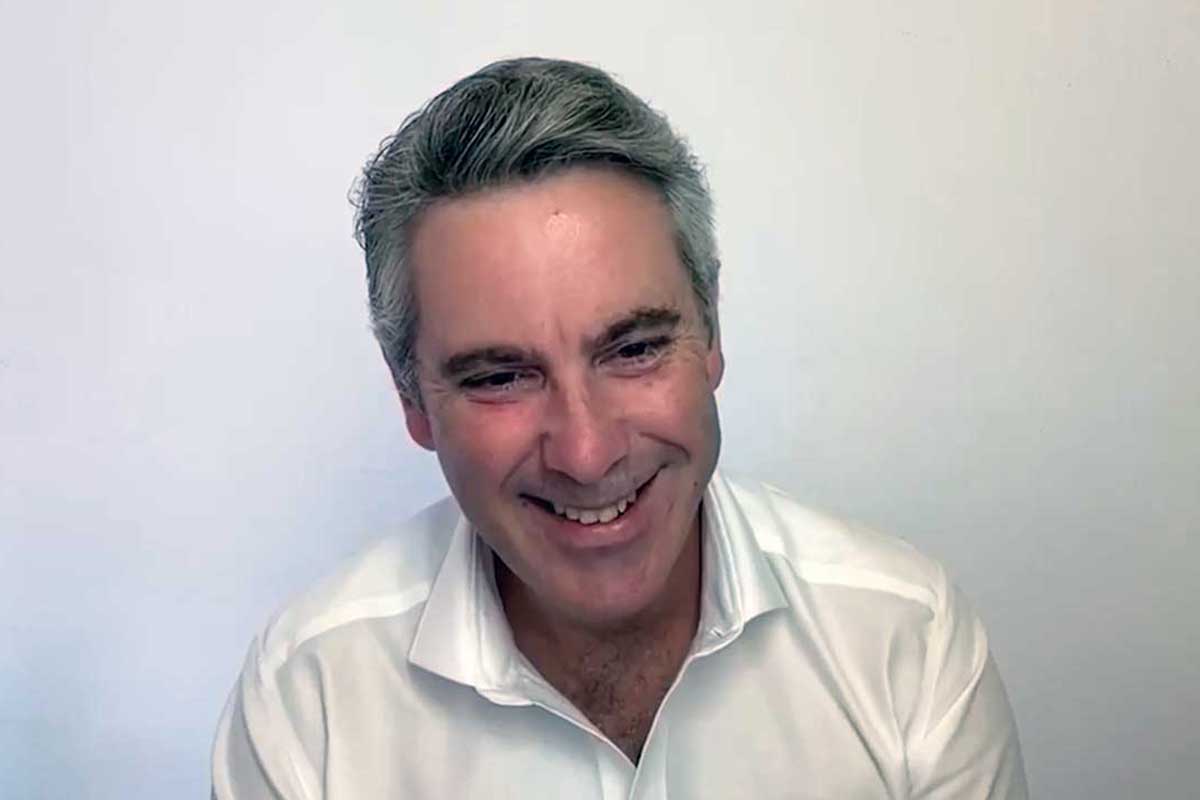
“Individually rare, collectively common,” says Dr. Harsha Rajasimha, founder and executive chairperson of the IndoUS Organization for Rare Diseases.
Approximately 11,000 rare diseases are recognized in the medical literature. By U.S. definition, each affects fewer than 200,000 Americans, yet collectively they impact more than 30 million people in the United States. Globally, rare diseases are estimated to affect between 300 and 400 million people.
Abstract DNA illustration representing the genetic basis of many rare diseases.
“Only five percent of these rare diseases have an approved treatment as of now,” Rajasimha says.
The remaining 95 percent have no approved therapies.
Diagnosis itself can take years.
“On average, it takes five to seven years to get a proper diagnosis, even in a developed country like the United States,” he explains.
Representation in research compounds the challenge.
“Historically, 80 percent of clinical trial participants have been Caucasian male adults with affluent socioeconomic backgrounds,” Rajasimha says.
Federal analyses and independent reviews have repeatedly documented underrepresentation of women and racial and ethnic minorities in clinical trials, particularly in earlyphase research.
The economic burden is equally sobering. A 2019 analysis by the EveryLife Foundation estimated that rare diseases collectively cost the United States nearly one trillion dollars annually, including direct medical expenses and indirect costs such as lost productivity and unpaid caregiving.
The African Gap: First, Recognition
While Ellis–Van Creveld syndrome is frequently associated with Amish founder populations in Pennsylvania, a molecularly confirmed case has been documented in Tanzania in peerreviewed medical literature.
Yet documentation does not guarantee recognition.
Prof. Leon Mutesa directs the Center for Human Genetics in Rwanda.
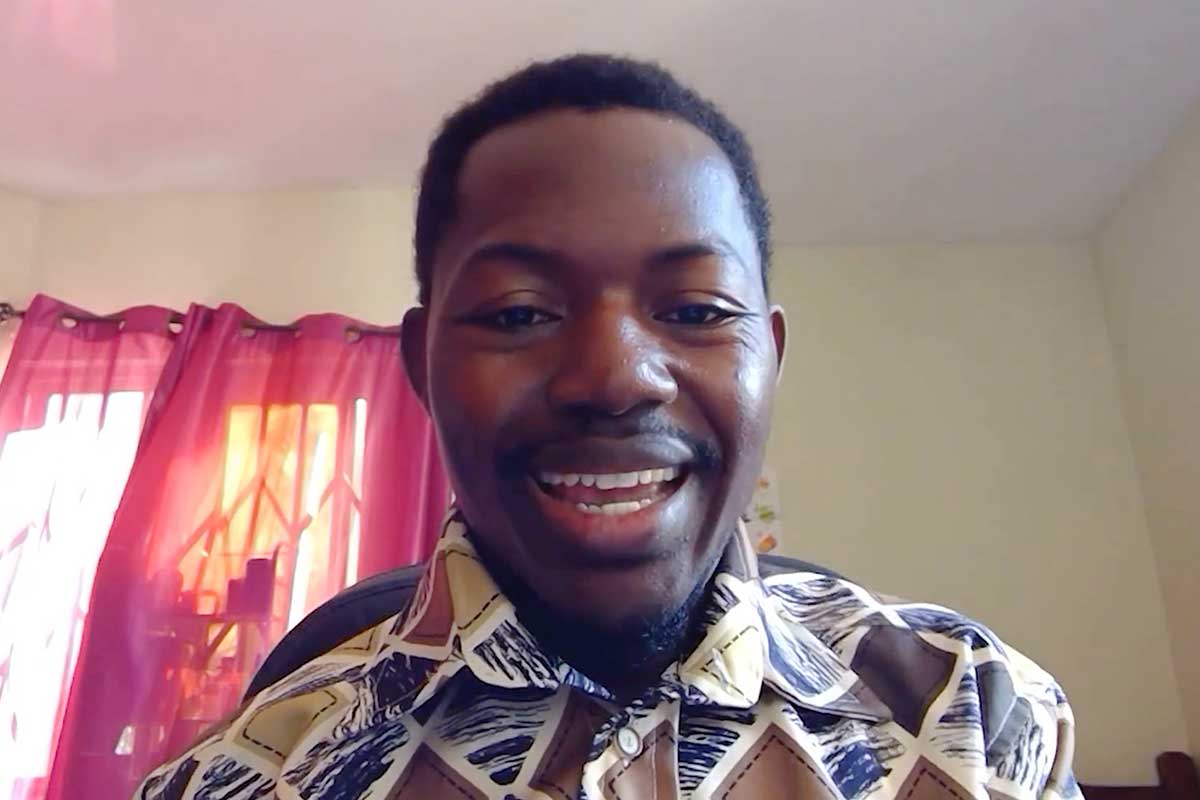
“It’s also present in African populations,” he says of Ellis–VanCreveldtype conditions. “Sometimes misdiagnosed or underdiagnosed because of a lack of access to diagnostics. Most of the professionals don’t recognize these disorders.”
In the United States, families may struggle to access specialized centers. In parts of Africa, the challenge begins earlier.
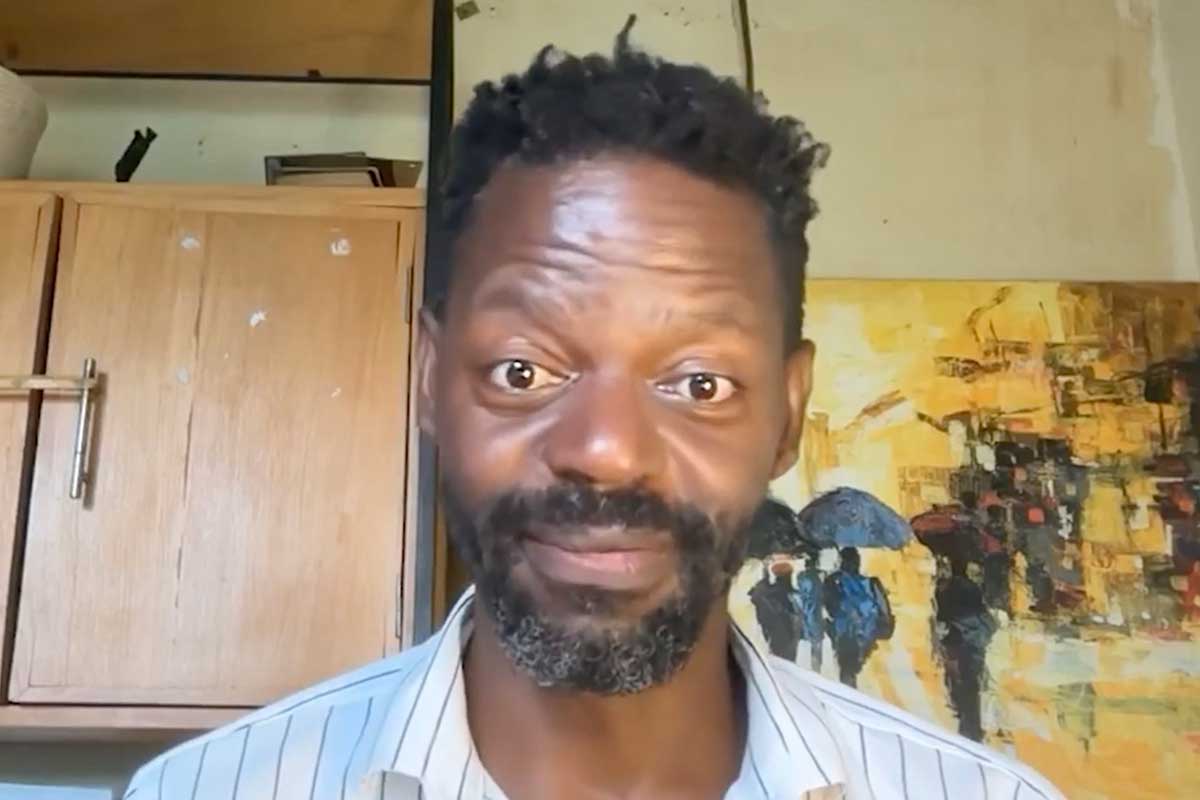
“We only have one genetic center in the country,” says Dr. Aime Lumaka, professor of genetics and pediatrics at the University of Kinshasa in the Democratic Republic of Congo.
“We only have four clinical geneticists correctly trained. We have zero genetic counselors for the entire country of about 110 million inhabitants.”
“The burden of not knowing is really destroying families,” he adds. And conditions may sometimes be attributed to spiritual causes.
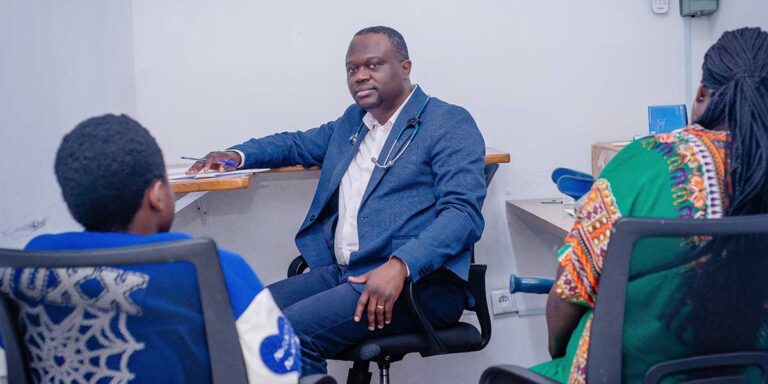
Dr. Aime Lumaka consults with a mother and child at the genetics clinic in Kinshasa. Photo courtesy Dr. Lumaka.
This is a reality across many African settings where diagnostic infrastructure remains limited. A child born with shortened limbs and extra digits in a rural clinic may never receive molecular confirmation of EVC or a related skeletal dysplasia. Without routine echocardiographic screening, congenital heart defects may remain undetected until they become life-threatening.
In Pennsylvania, surviving EVC may depend on the timing of surgery. In parts of Africa, survival may depend first on access to diagnosis.
The difference is structural.
Trauma Beyond the Operating Room
Shoemate’s daughter now attends school. She continues to see a cardiologist and prepares for orthopedic surgery to correct knockkneed alignment in one leg. Her life is active.
But trauma lingers.
“During winter months, if I hear a cough, my body reacts,” Shoemate says. “It’s very somatic.”
She speaks openly about postpartum anxiety and PTSD.
“Sometimes you need prayer, therapy and prescription,” she says.
Rare disease care often measures success by surgical survival. Families measure it differently.
“As a rare dad,” Rajasimha says, reflecting on losing a child to Edwards syndrome, “I realized that science and technology are critical, but patient advocacy is very powerful.”
A Crisis of Systems
Ellis–Van Creveld syndrome is rare.
The vulnerabilities it reveals are not.
Across continents, families living with rare diseases encounter delayed diagnoses, uneven access to expertise and limited representation in research.
“Rare does not mean unimportant,” Lumaka says.
Genetics is not the crisis. Systems are.
To describe EVC as rare is accurate. To allow rarity to become invisibility is a failure of structure, not science.
For families living with rare diseases worldwide, visibility is not symbolic.It is survival.
More Information:
Ellis–Van Creveld overview (NIH GARD): https://rarediseases.info.nih.gov/diseases/6323/ellis-van-creveld-syndrome
Orphanet EVC entry: https://www.orpha.net/consor/cgi-bin/OC_Exp.php?Lng=EN&Expert=289
FDA – Rare diseases overview: https://www.fda.gov/drugs/rare-diseases
EURORDIS – What is a rare disease:https://www.eurordis.org/information-support/what-is-a-rare-disease/
FDA Drug Trials Snapshots (representation in trials):https://www.fda.gov/drugs/drug-approvals-and-databases/drug-trials-snapshots
EveryLife Foundation burden study:https://everylifefoundation.org/burden-landing/
WHO – improving clinical trials (Africa underrepresentation context):https://www.who.int/activities/improving-clinical-trials
Tanzania molecularly confirmed EVC case (PubMed): https://pubmed.ncbi.nlm.nih.gov/31350806/This reporting is published with the support of the US National Press Foundation.